
Across generations, new industries have brought new demands for the continent’s minerals, fuels and other natural resources. But beneath those shifts sits a question that has followed many of Africa’s commodity booms: how much of the value generated from those resources remains in the countries that produce them?
That same concern is resurfacing around green hydrogen in Africa, but this emerging industry begins from a fundamentally different place. Unlike many of the resources that have drawn investors to Africa before, hydrogen is not waiting beneath the earth to be extracted.You cannot point to a green hydrogen deposit on a geological map, sink a shaft towards it or drill until it comes rushing to the surface. It has to be made, using renewable electricity to separate hydrogen from water and capture that energy in a form that can be carried into places that are difficult to electrify directly. A cargo ship crossing an ocean, for example, must leave the electrical infrastructure on shore and carry enough energy for the journey with it.
It is this ability to carry renewable energy into some of the hardest parts of the global economy that has drawn attention to hydrogen and, inevitably, to the places capable of producing the renewable electricity it requires. Africa has some of the world’s strongest solar resources, alongside significant wind potential, giving the continent many of the physical conditions needed to produce green hydrogen. Turning that potential into an industry, however, requires much more than the renewable energy from which hydrogen begins.

Building the Green Hydrogen Industry in Africa
Donatille Nkunzi began to see just how much lay between having the resources and building the industry as her own career moved towards hydrogen.
For more than six years, she had worked as an engineer in East Africa before an interest in renewable energy took her abroad to study hydrogen and, later, into work connected to hydrogen projects on the continent. By then, Africa’s renewable potential was becoming difficult to miss, but what caught her attention instead was who seemed to be turning that potential into projects.

“How come it was foreign companies coming to start green-hydrogen companies in Africa?” she remembers asking herself. “Why not African or local companies?”
The question stayed with her because Nkunzi could also see the difficulty of the alternative. Large hydrogen projects require enormous amounts of capital, alongside technical expertise and project-development capacity, with different forms of investment and partnership often needed to bring them to life. Her thinking therefore began at a different scale.
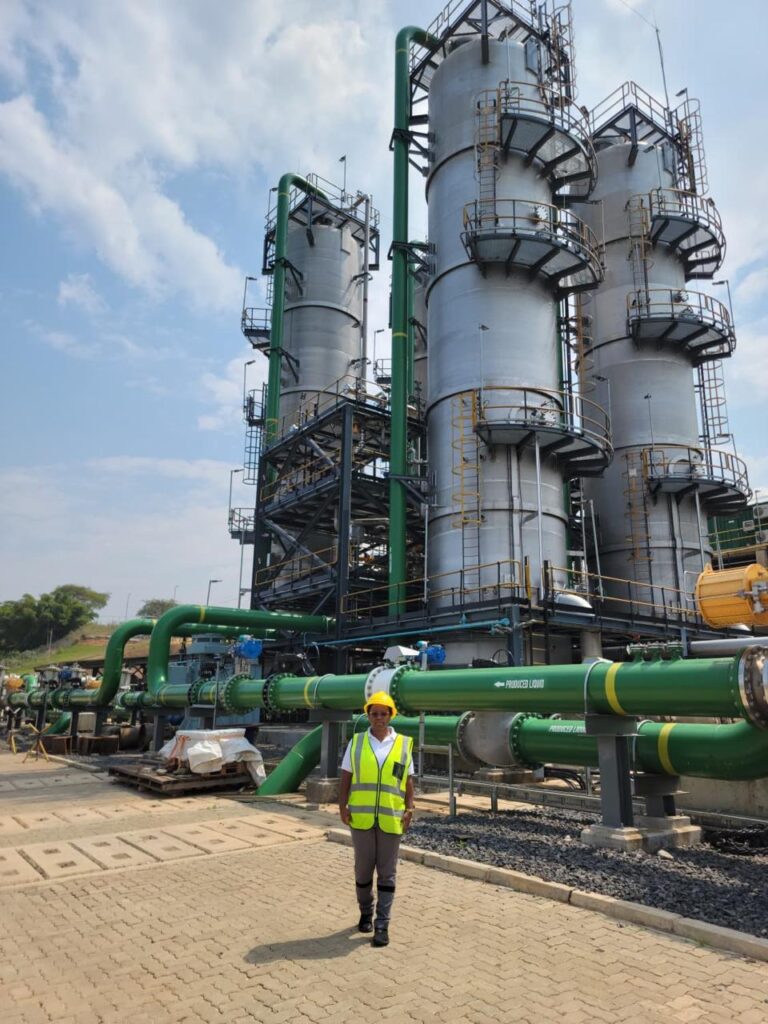
“Can’t we develop something, so that when foreign investment comes, we can co-develop these projects together?” she wondered.
That thinking eventually helped give rise to Heldis Green Solutions, built around an ambition that was larger than producing hydrogen alone. “Africa should not only consume the technology that is developed elsewhere,” Nkunzi says. For her, the opportunity lies equally in what comes after the molecule ( hydrogen): the products, industries and value chains that hydrogen could make possible.
The wider hydrogen landscape around that ambition has changed considerably in recent years, with interest in green hydrogen moving much faster than the projects themselves. Since 2020, the number of proposed projects has grown as hydrogen has gained attention as one way of cutting emissions from parts of the economy that are difficult to electrify directly. Across Africa, however, the distance between proposing a project and getting one ready to build remains significant. The International Energy Agency identifies 31 low-emissions hydrogen projects across the continent targeting production by 2030, but only one has reached a final investment decision, the stage at which the decision to proceed with a project is backed by the financial commitments needed to move towards construction.
From her experience working across different markets, Nkunzi has seen how much the environment around a project can determine whether an idea moves beyond the planning stage. In developed economies, she encountered renewable-energy projects supported not only through policy, but through public financing, subsidies and institutional support that could help developers navigate the regulations, permits and approvals needed to move projects forward. Across much of Africa, she says, governments may develop policies supporting the energy transition while having far less financial room to support the projects expected to deliver it.
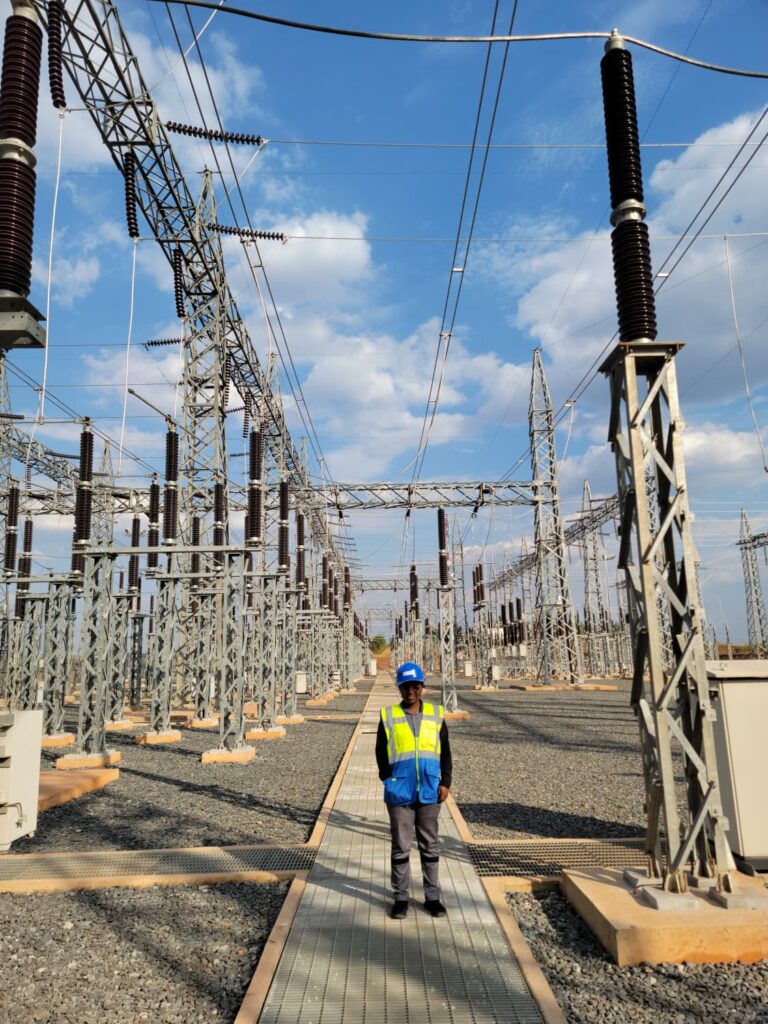
“Sometimes the policy is there,” she says, “but the implementation and the financing” are still a challenge.
For Nkunzi, developing hydrogen projects means weighing long-term investment against more immediate needs. Governments with limited public resources may have to choose between supporting hydrogen and funding priorities such as agriculture and food production, whose benefits are easier to see now. A hydrogen project may take seven or ten years to pay back.
She has learned that resources and technical expertise alone are not enough. “Resources are not enough. Even expertise is not enough,” she says. “You cannot develop hydrogen projects in isolation.”
Because these projects require substantial investment, developers also need private investors. Those investors want to know whether buyers will take enough of a project’s output, at a price that makes the investment worthwhile. That raises the question of scale: how large a plant can the available market support?
The Economics of Scale
Fertiliser offers one example. Hydrogen can be used to produce ammonia, an essential ingredient in nitrogen fertilisers. The International Energy Agency Global Hydrogen review 2026 estimates that meeting Africa’s existing fertiliser-use targets could create demand for around 1.5 million tonnes of hydrogen. Yet more than 80 per cent of the ammonia production capacity currently proposed across Africa is intended for export.
The estimate points to potential demand; it does not mean buyers have committed to purchase that amount from particular projects. Nkunzi’s point is that local demand may exist, but may not be enough to support the large plants investors prefer. Those plants can produce hydrogen more cheaply, but their output may exceed what local buyers can use.
“The market is there,” she says. “The problem is the scale.”
Export markets can offer buyers able to take larger volumes. Long-term purchasing agreements can also give investors confidence that the output will be sold, helping make projects of this scale viable. This helps explain why many proposed projects seek buyers beyond Africa.
Nkunzi understands that economic reality, but she also wants the conversation to begin closer to home.
“We should be trying to remove this mindset of saying, let’s produce hydrogen for export,” she says.
For her, fertiliser illustrates what could be missed when the conversation begins with finding a buyer elsewhere. If African economies already consume products that can be made using hydrogen, then part of building the industry is asking how much of that demand could eventually be supplied locally, and how much of the value chain between producing hydrogen and making the final product could also be built on the continent.
And some of that value is created before a single kilogram of hydrogen has been produced.
A hydrogen plant has to be built, and that means buying the electrolysers, control systems, compression and storage equipment and other machinery required to make it work. In financial analyses Nkunzi has worked on, she says that machinery and equipment have accounted for more than 60 per cent of the project cost, which means that where those technologies are manufactured and purchased already determines where a significant share of the investment goes.
“All the raw material being used, they are mined locally in our countries,” she says. “We send them, then the machinery is brought back to us.”
Nkunzi sees scope for a regional approach to making that equipment. She is not suggesting that each place should make every component. Instead, production could be shared according to the minerals, industrial capacity and expertise available in different parts of the region, with equipment manufactured or assembled in one place supplying projects in another.
For her, that possibility is also tied to a practical problem she has encountered while working on hydrogen projects: equipment delays. A supplier may agree on a price and delivery date, but high demand can push delivery back by months. Equipment expected in October, she says, might not arrive until January. The project is left waiting, while staff still need to be paid.
“You are still paying the personnel,” she says. “You cannot do anything, you are just waiting.”
Regional manufacturing would not remove every challenge facing hydrogen projects. But, Nkunzi argues, producing more of the equipment closer to where it is needed could reduce reliance on distant suppliers, lower import costs and make delays less likely. It could also mean that more of the investment in these projects supports industries in Africa, from the materials used to make the equipment to the products made with hydrogen.