By June 2026, nearly three in every four Kenyans lived in households with access to electricity. This progress has been driven by government investment, donor-funded programmes such as Last Mile Connectivity, the expansion of the national grid, and the development of mini-grids and off-grid solar systems in communities the grid has yet to reach.
For some communities, however, the value of electricity increasingly depends on what it can support. It is not only about lighting a home—sometimes for just a few hours—but also whether there is enough power to run a business, pump water or help a household earn an income.This question is becoming more important as electricity access in Kenya expands and more families consider what the power available to them can actually do.

Emma Sintent has experienced both sides of the divide . She grew up in a peri-urban area where grid electricity was part of everyday life. More than a decade ago, marriage brought her to Namuoncha Ranch, a Maasai community in Kenya’s Rift Valley where most families depend on livestock and small-scale farming to earn a livelihood.
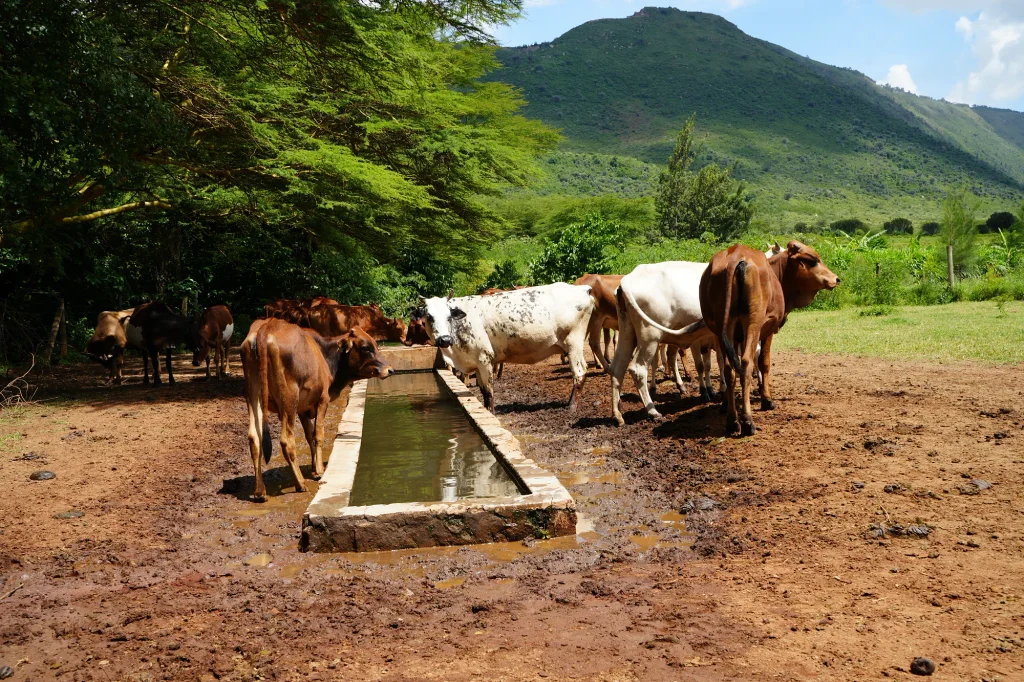
Namuoncha stretches across a wide area, with many families living far from the nearest grid connection. Here, more than 500 households remain beyond the reach of the national grid, including Emma’s. The nearest place supplied by Kenya Power is a school about two to three kilometres from her home.
With the grid still out of reach, many families have turned to the sun. Across Namuoncha, small solar panels sitting on tin roofs or beside homes have become part of the landscape, providing electricity for lighting and other household needs.

When I visit Emma, we sit outside her home as she serves us a cup of goat milk. A satellite dish hangs from one corner of the house, and a small solar panel sits on the tin roof above us.
Emma remembers when solar panels first began appearing on homes in Namuoncha. She wondered how the families had acquired them and began asking around. Those conversations eventually led her to a Solar Panda home system of her own.
At the time, kerosene was the family’s only source of lighting, and there was nowhere to buy it within Namuoncha. Whenever it ran out, Emma had to walk more than five kilometres to buy more.
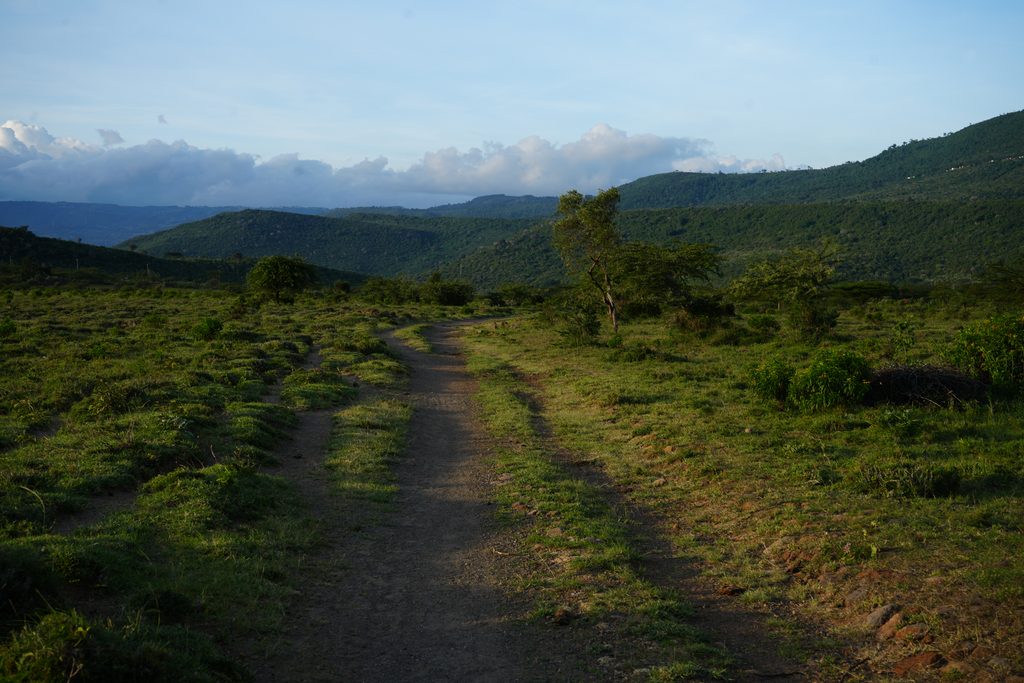
She also worried about the livestock her family depended on for its livelihood. “Wild animals frequently entered the homestead and attacked my animals, and the darkness made it difficult to see what was happening outside,” she says
The lights around the compound now allow Emma to respond more quickly when she hears the livestock become restless. She has also noticed that wild animals are less likely to approach when the lights are on.
She shows me the system she acquired: a rooftop panel connected to a battery and control unit, lights installed around the home, phone-charging ports, a rechargeable radio and torch, and an LED television. A family that once relied on kerosene for light can now continue using their home after sunset, with electricity available for lighting, communication and entertainment.

The changes inside her home have shaped what Emma would like electricity to make possible on the small farm surrounding it. When I ask what kind of power she would prefer, she speaks about pumping water and making greater use of the land.
What Electricity Access in Kenya Can Support
A few kilometres away, Kitilikini Primary School offers an example of energy being used for some of the activities Emma would like to pursue closer to home.
The school installed its first solar system in 2013 and was later connected to the national grid through the Last Mile Connectivity Programme. Electricity from the grid supports teaching, administration and the school’s daily operations. But the connection ends within the school compound and does not supply the surrounding households.
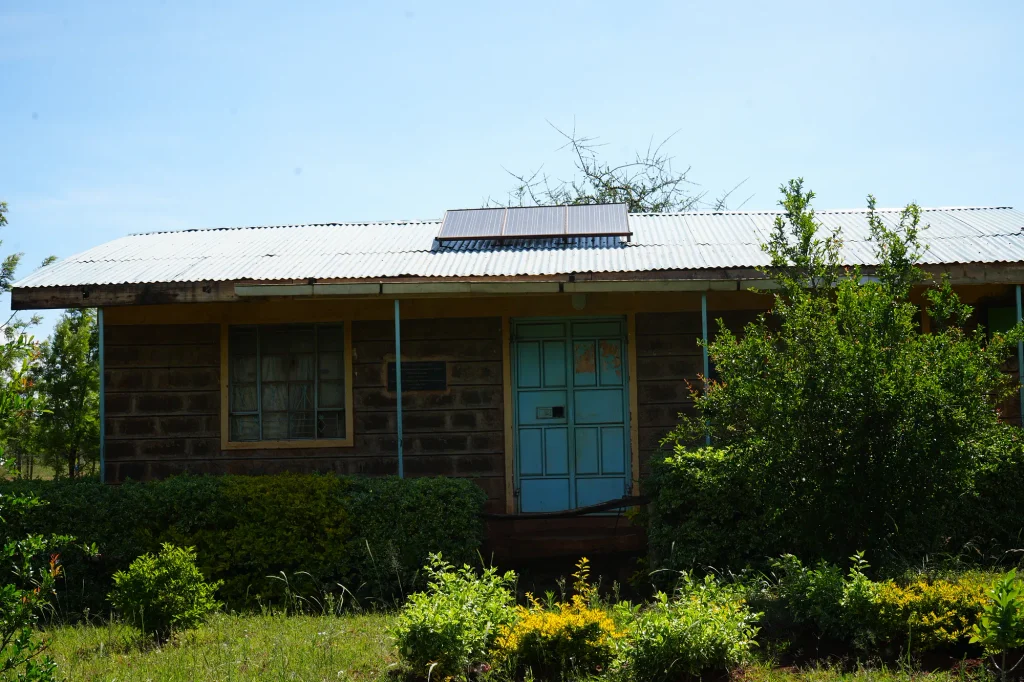
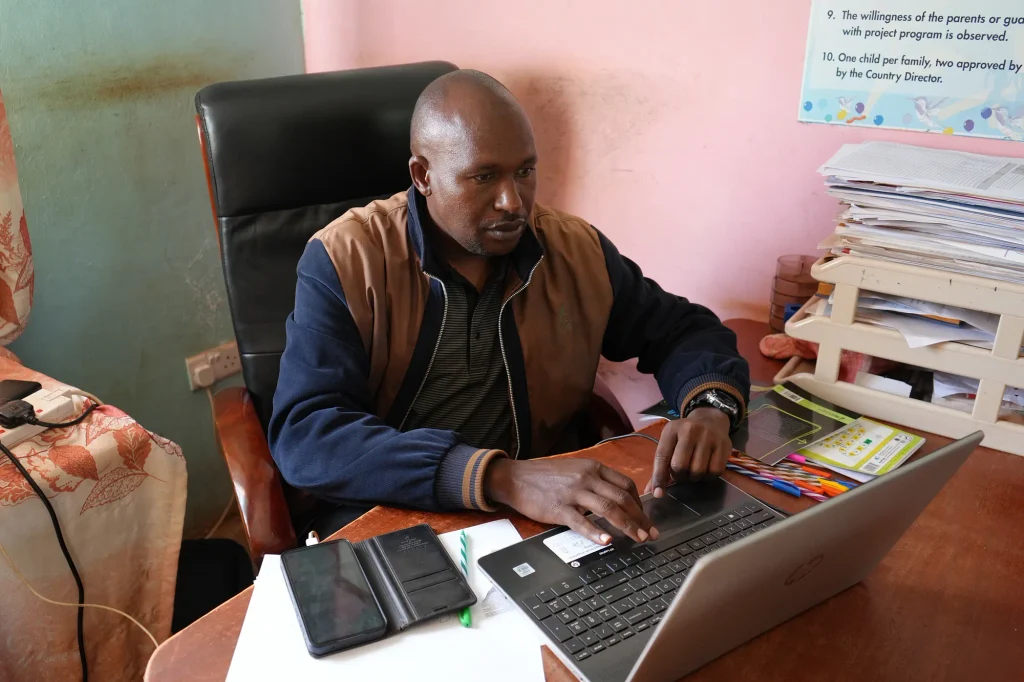
“The electricity is for the school,” says Dennis Mosite, programmes director at A.I.C. Kanan Child Development Centre, which is based at Kitilikini Primary School.
Water reaches the school and the surrounding community through a separate arrangement involving a nearby water factory. The factory uses its solar installation to pump water to the school, which serves as a collection point for families living in the area.
“If this solar agreement with the factory were not there, the community would not have access to water. “They would be relying on donkeys to fetch it,”Mosite says.
The system serves an estimated 600 to 700 within the community. Families collect the water for their homes and use it for livestock and small-scale farming. At the school, it supports a garden. Community members also have access to an incubator for hatching chicks, creating an entry point into poultry farming, and the school uses biogas for cooking.
The arrangement brings together resources held by different institutions. The factory supplies the solar power needed to pump the water, the school provides a point from which the community can collect it, and families use the water for domestic needs and activities connected to their livelihoods. It has brought water closer to hundreds of residents and reduced their reliance on donkeys to transport it over longer distances.
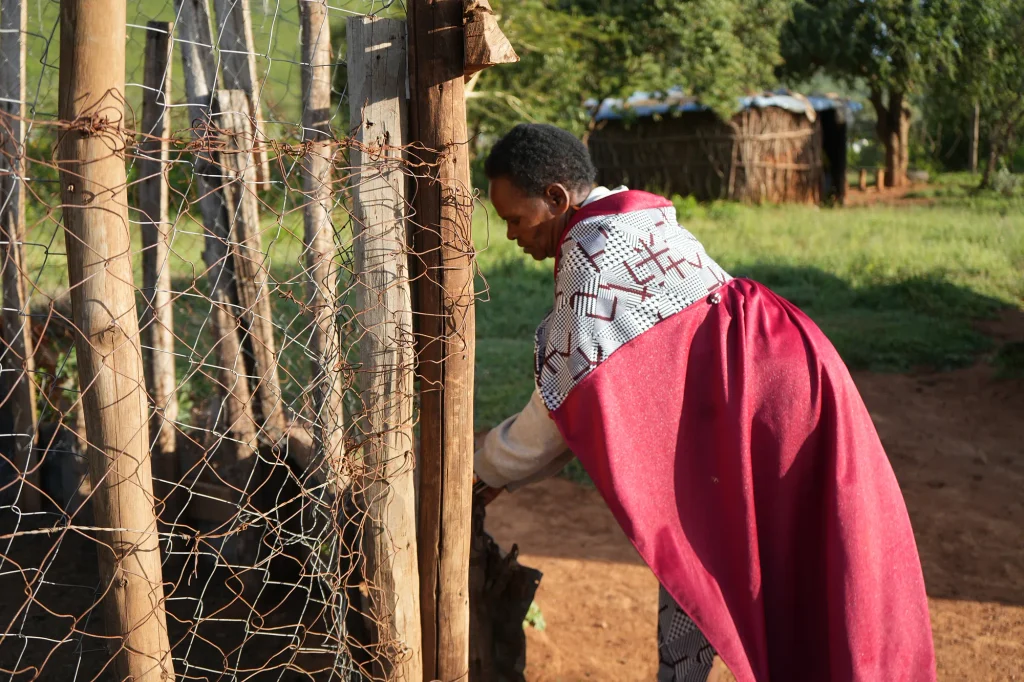
Accessing the water still requires Emma and other residents to travel to the school. The distance keeps the resource beyond the immediate reach of their homesteads, even though the journey is shorter than the alternatives families once relied on.
From Access to Productive Use
Emma’s solar system has changed what she can do at home. She has light at night, can charge her phone, watch television and keep an eye on her livestock. At the school a few kilometres away, a larger solar installation is doing more. It pumps water for hundreds of people and supports farming and livestock activities.
For Emma, that is the gap she still feels and desires to fill. She wants electricity that can pump water on her farm and help her get more from the land she already depends on.
That is where energy access begins to intersect with productive use, when power moves beyond lighting and household needs and starts supporting the work through which people earn a living.
Kenya’s electricity-access figures record how many people can use some form of power. The experience of families in Namuoncha adds another measure: the work that electricity allows them to do, the livelihoods it can support and how close those opportunities are to close to home.