


Across East Africa, trucks carry food from farms, raw materials to factories, containers from ports and finished products to markets, forming part of a freight system that moves goods within countries and across borders. At the Port of Mombasa alone, more than 45 million tonnes of cargo were handled in 2025, nearly 16 million tonnes of it transit cargo moving through Kenya to markets elsewhere in the region.
Much of that freight movement still depends on diesel, and as electric trucks begin to enter the Kenyan market, they are entering a system where vehicles have to carry commercially viable loads over long distances, fit into working delivery schedules and earn enough from those journeys to justify the investment. Electrification therefore has to work within a freight system already shaped around the economics and practical demands of moving goods.
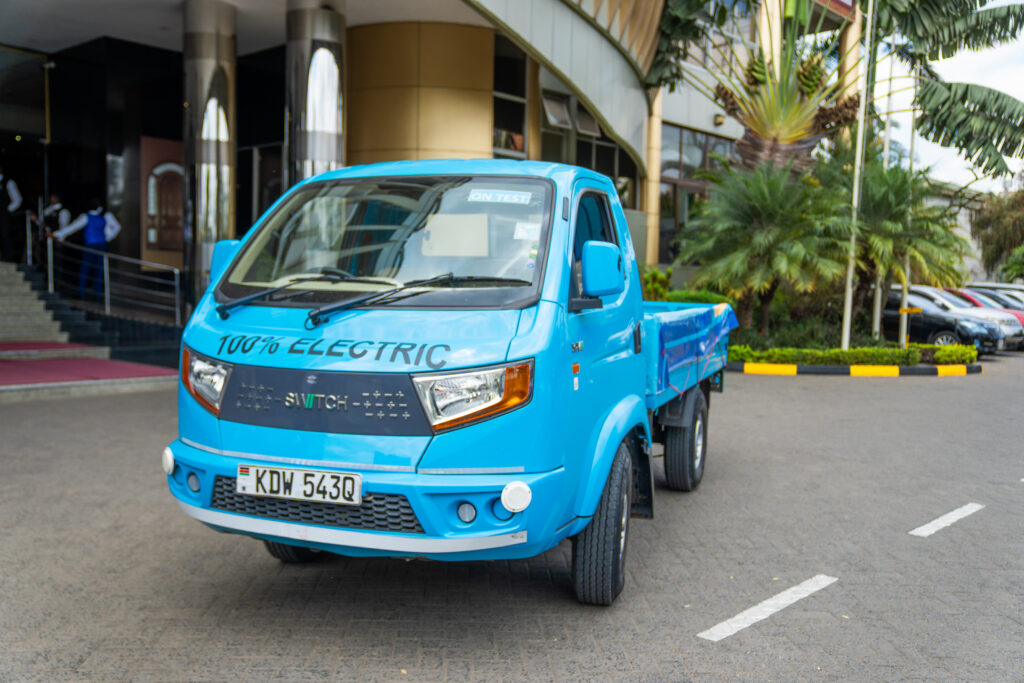
Those were some of the questions at the centre of discussions at the Africa EV Freight Forum in Nairobi, co-hosted by Smart Freight Centre and Thought Leader/Intro Africa, where logistics operators and cargo owners joined vehicle manufacturers, charging providers, financiers and public agencies to examine what fleet electrification would require in practice: from building a commercial case for electric trucks and developing the infrastructure to support them, to the partnerships and policy environment needed for the transition.
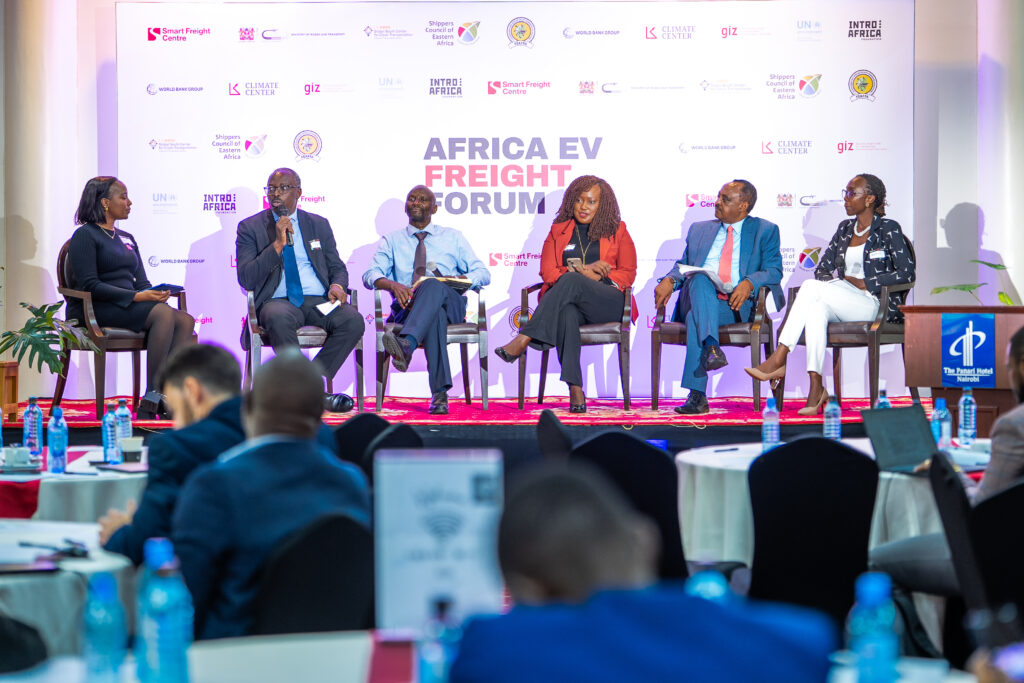
Africa Global Logistics has already spent years exploring what that transition can look like.
Dennis Kiberenge, AGL’s regional manager for safety, compliance and sustainability, told the forum that the company’s experience with electric mobility began inside its warehouses. In 2016, AGL started replacing diesel and LPG forklifts with electric models.
“It was a risk,” Kiberenge recalled. “We had no idea what electric forklifts would be like.”
The experiment, Kiberenge said, proved “unbelievably profitable for business” and helped build AGL’s appetite for taking electrification beyond the warehouse and onto the road. The company now operates about 250 electric trucks across Africa and is looking to introduce electric trucks into its East African operations, where it already owns a fleet of about 250 trucks.
In Kenya, however, getting hold of an electric truck is still difficult. Kiberenge told the forum that even an operator with the budget to buy one would have to actively seek it out. “You literally have to go out of your way to get it done,” he said.Electric forklifts have reached a very different point. Kiberenge estimated that someone looking for one in Nairobi today could probably find ten options within an hour. For AGL, that contrast is particularly striking. Electric forklifts were the company’s experiment in 2016; a decade later, they are readily available. Electric trucks are yet to reach that point.
But getting the trucks onto the market is only part of what has to happen. For logistics companies, Kiberenge said, electrification also depends on the customers whose goods those trucks are moving.
The customer ultimately pays
AGL owns about 250 trucks in East Africa, but Kiberenge said many of them rarely enter an AGL depot. They spend their working lives moving between ports and customer facilities, carrying raw materials for manufacturers and products being shipped out of Kenya.Electrifying those journeys therefore requires the companies whose goods are being moved to come along. “Without partnership,” Kiberenge said, logistics companies cannot simply shift cargo from the diesel trucks customers already know to electric ones.
Price is a large part of that conversation. Freight is highly competitive, and Kiberenge said customers are unlikely to accept a higher transport rate simply because the truck carrying their goods is electric.
“If EV is more expensive than diesel, no customer will buy,” he told the forum.

For the customer, the calculation is fairly straightforward. Transport forms part of the cost of getting a product to market, and an increase in the freight rate eventually has to be absorbed somewhere along that chain. An electric truck may reduce emissions from that journey, but for the companies paying to move the cargo, it still has to compete with diesel on cost.
Customers, however, are beginning to have another reason to pay attention to the truck carrying their goods.
The GHG Protocol, developed through an initiative led by the World Resources Institute and the World Business Council for Sustainable Development, provides companies with a framework for measuring greenhouse-gas emissions. Under its Scope 3 Standard, that includes emissions generated across a company’s supply chain, including transportation carried out by another company. A manufacturer hiring a logistics company to move its goods may therefore have to account for the emissions from that journey even though it does not own the truck.
At the forum, one participant described international customers asking the company to track its sustainability efforts. That had prompted the company to look further into its operations, including the trucks collecting agricultural products from farms.
For the companies paying to move those goods, however, greater attention to freight emissions does not remove the expectations around cost and delivery. The difficulty comes when those expectations meet the cost of putting an electric truck on the road, something one operator at the forum has spent roughly two years trying to work through on the Mombasa–Nairobi route.
The two-year calculation for electric trucks in Kenya
“No customer of mine is going to pay me a penny more,” she said. “They’ll be happy to have an EV truck offloading their cargo. But if you go and ask them, can I have 10% more on the rate, that is not happening.”
The company studied the terrain, charging locations and how much cargo the truck could carry, returning several times to the question of payload. The model it eventually settled on is expected to carry 29 tonnes, according to the speaker, and charging locations along the route have been identified.
The company has now signed a contract and intends to begin with the Mombasa–Nairobi route. Simulations using its own data suggest the electric trucks could cost less to operate than diesel, provided new taxes are not imposed on the infrastructure supporting them. Those calculations will soon begin meeting actual operating conditions, with the company expecting to generate its own data once the trucks are on the road.
There is still relatively little experience in East Africa to draw from. Global electric-truck sales more than doubled in 2025 to over 400,000 vehicles, according to the International Energy Agency, but around 90 per cent were sold in China. For operators in East Africa, the evidence they need will increasingly have to come from trucks working here, where electricity tariffs, vehicle prices, financing arrangements, freight patterns, distances and road conditions shape the economics of each journey.
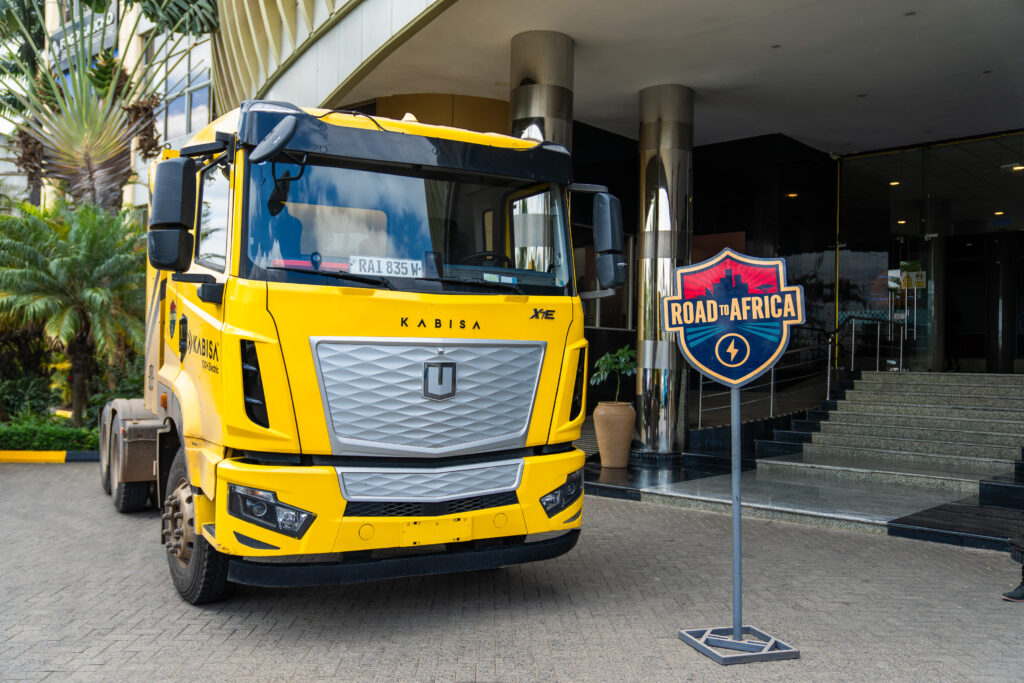
Kabisa is already gathering some of that information on the road. The company has been testing an electric truck from Rwanda across regional routes, using the journeys to understand range, weight and possible charging locations under actual operating conditions.
Those journeys will help establish what an electric truck can do. But for an operator thinking about buying one, there is another hurdle before the truck ever leaves the yard and that is paying for it.
What the numbers look like for electric trucks in Kenya
At the Nairobi forum, one industry representative described the problem as one of cash flow. A diesel truck spreads much of its cost over years of buying fuel. With an electric truck, more of that money may have to be found at the beginning because the vehicle costs more to buy.
So even where an operator expects to spend less once the truck is running, getting to that point can still require a much larger amount of money upfront.
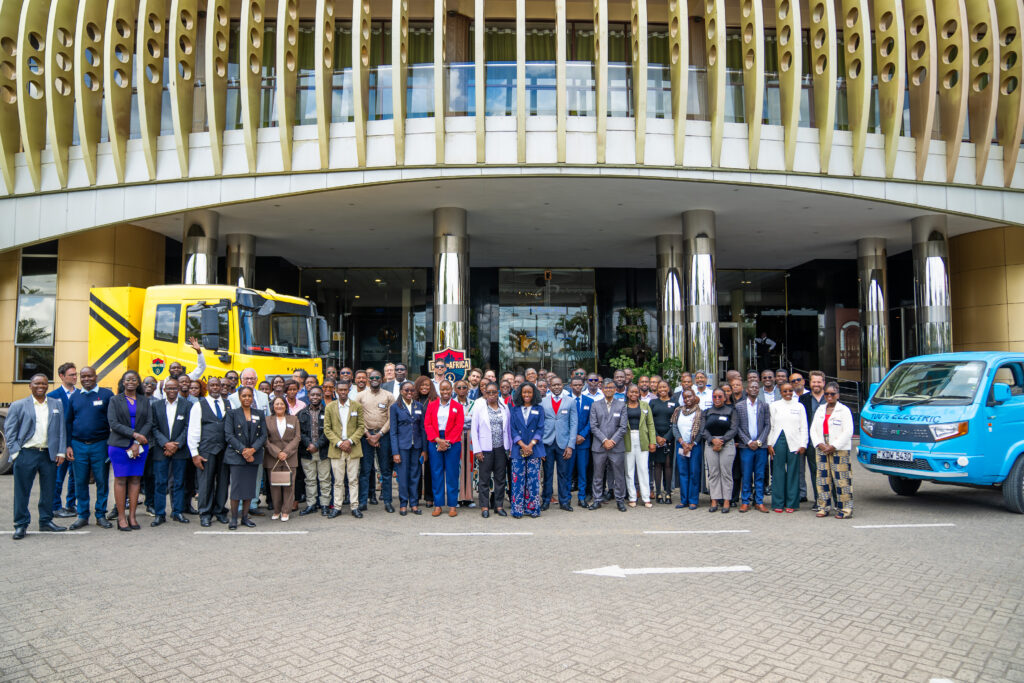
That brings banks and other lenders into the picture. Before financing a truck, they want to understand the business behind it: the contracts that will keep it carrying goods, the income those journeys will generate and the costs of keeping the truck on the road. With electric trucks still relatively new to East African freight, there is also less local experience to draw on when making those decisions.
That will change as more trucks begin working on regional roads, giving operators and financiers a clearer picture of what it actually costs to run electric freight here and how the business case holds up in practice.
But financing the truck and getting it onto the road only takes the journey so far. Between Mombasa and Nairobi, and eventually farther into the region, that truck will need somewhere to charge, enough electricity when it gets there and infrastructure capable of supporting heavy vehicles moving on commercial schedules.
The truck may be ready for the route. The next question is whether the corridor is ready for the truck.
This is the first of a two-part series on electrifying freight in East Africa. In Part Two, we follow the journey beyond the truck itself, exploring what it would take to build an electric freight corridor from Mombasa into the region from charging and electricity supply to the challenges of moving electric trucks across borders.
Part Two will be published on Fuel the Shift.