
Nigeria’s new Renewable Asset Management Company, RAMCO, is an attempt to make publicly funded solar assets outlive their launch photos , by fixing what happens after commissioning.
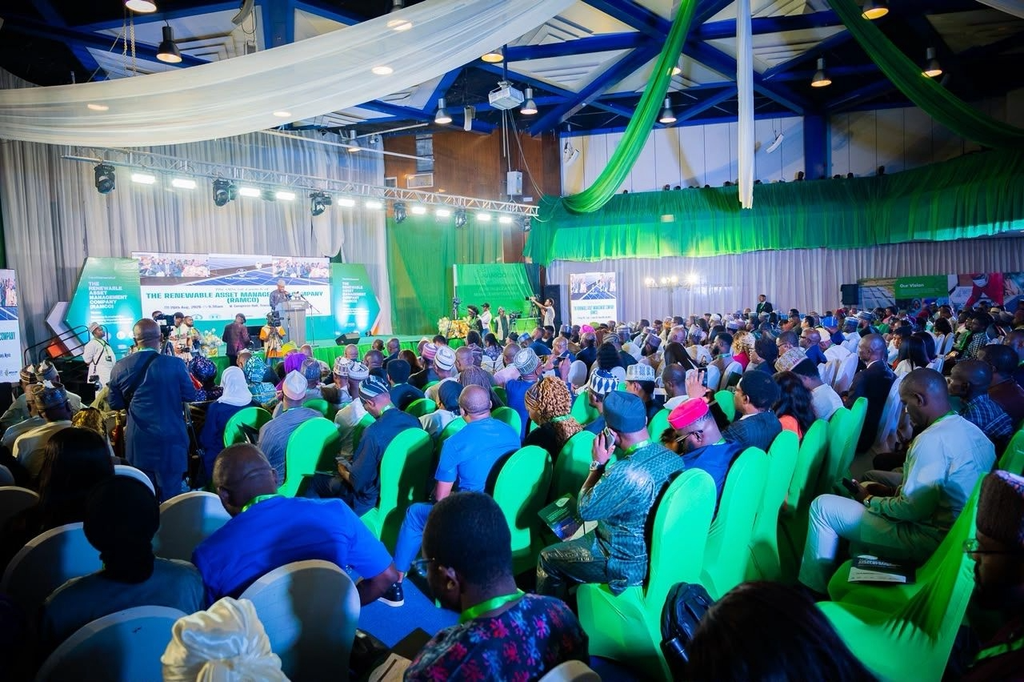
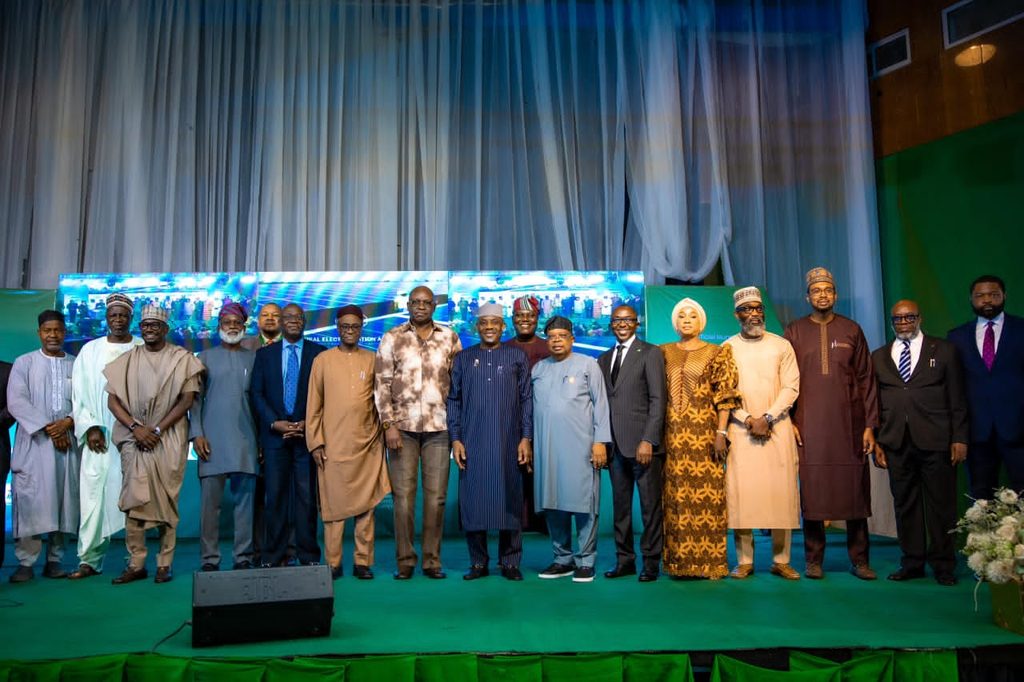
At the Transcorp Hilton in Abuja, the launch of RAMCO looked like a familiar Nigerian government ceremony: podium, branded backdrop, rows of officials in agbada and blazers, and the promise of a new acronym.
What Dr Abba Aliyu, Managing Director of Nigeria’s Rural Electrification Agency (REA), said next was less familiar.
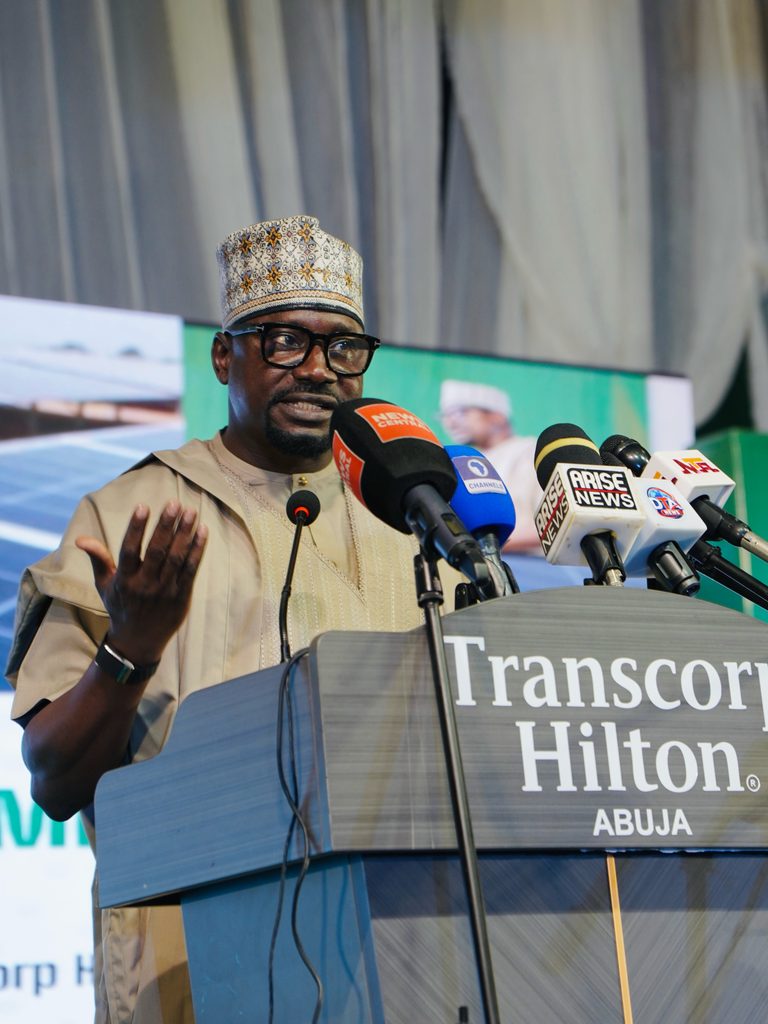
Before introducing the Renewable Asset Management Company (RAMCO), Aliyu told the room about a mistake.But first, it is worth understanding what RAMCO is actually supposed to do.
In simple terms, RAMCO is Nigeria’s attempt to solve one of the least glamorous problems in renewable energy: What happens after the solar project is commissioned?

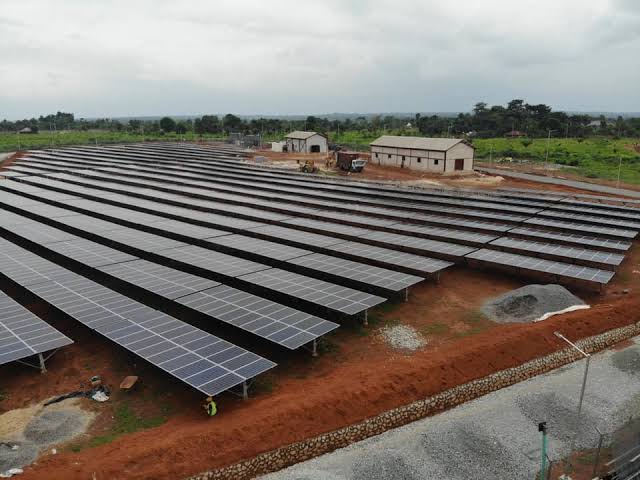
The company is being created to take responsibility for publicly financed renewable-energy assets, particularly systems deployed to institutions such as universities and teaching hospitals. Instead of leaving them as government-funded projects with no durable maintenance structure, RAMCO plans to manage them as operating assets: meter the electricity, bill beneficiary institutions a sustainability tariff, use the revenue to maintain and replace equipment, and keep the systems working.
The goal is not simply to build more solar capacity. It is to make sure the capacity Nigeria has already paid for survives long enough to justify the investment.
Since 2017, REA says the Energising Education Programme has deployed 82 megawatts of solar-hybrid generation across 22 federal universities and three teaching hospitals, while more than 150 megawatts is under construction or in the pipeline through other initiatives.
But when Aliyu’s team assessed the seven sites delivered under the programme’s first phase ahead of RAMCO’s launch, only three were found to be in good or usable condition.
“Of the seven, only three were in good or usable condition,” Aliyu told the audience. “Not because of engineering failure, but because we had not adequately institutionalised what happens after the commissioning of the project.”
It is an admission that sounds specific to Nigeria and familiar to anyone who has watched a publicly funded energy project lose momentum after the launch. A plant gets built. A minister cuts a ribbon. A press release goes out. Three years later, nobody can say who is supposed to fix the inverter.
The economics of a plant nobody owns
The mechanism behind the failure, once you hear it laid out, is almost mundane. A solar plant donated to a public institution generates power nobody pays for. Because nobody pays for it, there is no revenue attached to the asset. Because there is no revenue, there is no budget line for operation and maintenance. Because there is no maintenance, a battery fails, or an inverter trips, and stays that way. Eventually the government has to find fresh capital to rebuild the same plant it already built once.
Aliyu framed it as a structural flaw in how public capital moves. It travels in one direction only, he argued: government builds, the asset decays, government comes back and rebuilds, and the cycle repeats. A country cannot finance a modern electricity system, he said, on infrastructure that keeps having to be built twice.
RAMCO is REA’s attempt to break that cycle, not by building more solar plants, but by changing who is financially responsible for the ones that already exist. Its job, as Aliyu described it, is to convert previously donated infrastructure into metered, billed, professionally maintained assets, so that each site generates enough revenue to fund its own upkeep. Institutions that once received free power will instead pay a tariff for reliable power, spending money they were often already spending on diesel generators and grid electricity in the first place.
The number REA is betting on
To make that case, Aliyu pointed to a single site: a solar plant at Alex Ekwueme Federal University, Ndufu-Alike, Ikwo, Ebonyi State, commissioned in 2019, serving more than 9,500 students and staff. In its first five years, he said, the plant generated approximately ₦1.8 billion in combined savings from avoided diesel purchases and electricity bills, while avoiding roughly 2,367 tons of carbon emissions.
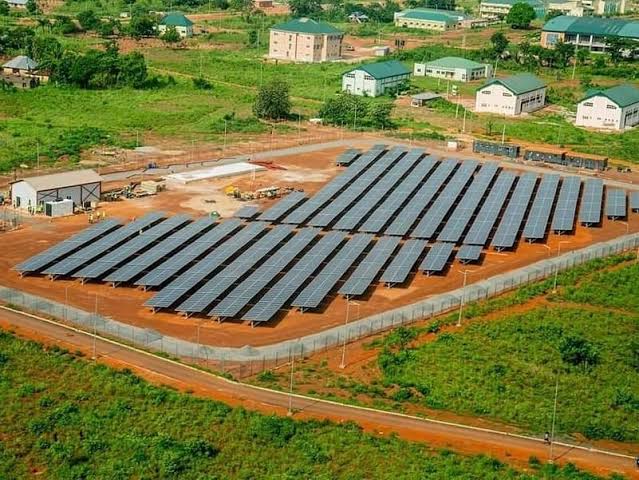
Aliyu said the figure was proof that reliable solar power is not a subsidy Nigeria cannot afford, but a redirection of money the country is already spending badly. He framed the trade-off in stark terms: institutions can keep paying repeatedly for diesel and fuel infrastructure, or pay “a predictable tariff that keeps a cleaner, more reliable system operating for 20 years,” which he called “the RAMCO impact.”
It is worth being precise about what that number does and does not prove. It is a single, apparently well-run site, cited by the agency proposing the new model, not an independently audited figure. What it demonstrates is a plausible mechanism, not yet a verified national pattern. The test for RAMCO will be whether that Abia State result can be repeated, tracked, and published across the 22 federal universities and three teaching hospitals now carrying REA’s solar assets, not whether it happened once.
A cabinet minister makes the same argument
Aliyu’s framing did not stay confined to REA’s own messaging. Nigeria’s Minister of Power, Joseph Tegbe, addressed the same launch, held under the theme “Powering Sustainability — Launching Nigeria’s Renewable Asset Management Company,” and said RAMCO represented a shift in the management of public assets, with emphasis on professional stewardship, sustainability, governance and measurable performance.
He put it plainly: RAMCO exists to protect what has already been built, optimise the assets already in the ground, and ensure every naira invested in energy infrastructure produces sustained service, rather than a one-time result.

Tegbe also disclosed that the federal government is targeting a rise in national electricity supply from roughly 5,000 megawatts today to 6,500 megawatts by the end of 2026, and 8,000 megawatts by 2027, part of a wider grid stabilisation push running alongside RAMCO’s narrower mandate over distributed solar assets. Also present were the Minister of Education, Dr Tunji Alausa, the Minister of State for Health, Dr Iziaq Salako, and representatives of the Ministry of Finance, underlining that RAMCO is being treated as a cross-government commitment rather than an REA side project.
That a sitting power minister chose the language of stewardship and measurable performance, rather than megawatts and ribbon cuttings, is notable in a sector long criticised for celebrating installed capacity that never quite reaches consumers. It suggests the sustainability argument that opened the launch was not simply an REA talking point aimed at one audience, but a position the wider Ministry of Power, alongside Education, Health, and Finance, is prepared to be held to as well.
What RAMCO says it will do next
Aliyu set out a four-part near-term plan. RAMCO will first complete a technical assessment of the solar assets already deployed in universities, to establish which are salvageable and which are not. It will then work with MOFI, InfraCorp, and Nigeria’s Ministry of Finance to formally transfer those assets from REA’s books onto RAMCO’s own balance sheet, a legal and accounting step that will determine whether the company can actually be held to account for what it owns.
Third, it will complete the onboarding of long-term operations and maintenance partners for the finished phases of the Energizing Education Programme, rather than leaving upkeep informal. Finally, it plans to engage each beneficiary institution to build what Aliyu called an energy service company ecosystem, essentially a market of local firms that keep distributed solar assets running commercially, not through occasional government intervention.
REA also used the launch to point to a second, related bet: domestic manufacturing. The agency said it invested $125 million last year in joint-development agreements with local manufacturers producing solar panels, batteries, inverters, street lighting, and solar asset recycling capacity, part of a push toward roughly 200 megawatts of local manufacturing capacity that REA argues will create jobs and reduce Nigeria’s dependence on imported equipment.
Who is actually watching
The question raised most often since the launch, in comment sections and private conversations alike, is a simple one: how will anyone outside REA actually know whether RAMCO is working? Aliyu has offered an answer of sorts. He said RAMCO’s performance would ultimately be assessed against four measures: how many renewable assets it keeps productive, how much private capital it attracts, how many distressed projects it restores, and how much capital it successfully recycles into new electrification work.
Those are sensible things to measure. What is missing, so far, is who measures them. No independent auditor, regulator, or civil society verification body has been named. Nothing has been said about how often results will be published, or in what format. For an initiative whose entire premise is that Nigeria’s public sector cannot be trusted to self-report on its own infrastructure, RAMCO’s own accountability structure is, for now, still self-reported.
One response worth sitting with came from a reader responding to my initial LinkedIn post from the launch, who argued for a narrower, more provable starting point than a national rollout: “My view would be to start with a small number of assets and prove they can be brought back into dependable operation. A few sites performing well for long enough would probably do more for investor confidence than a very large rehabilitation plan on paper.” It is a fair challenge to RAMCO’s own four-part plan, which currently moves from assessment straight into a nationwide asset transfer and an ESCO ecosystem, without a clearly defined pilot phase in between.
What is in it for the people who actually keep the lights on?
For engineers and technicians, RAMCO’s pitch is a change in the shape of the work itself. Nigeria’s renewable energy sector has largely run on a boom-and-bust project cycle: a contractor installs a system, gets paid, and moves on to the next tender, with no ongoing revenue tied to whether the plant survives its second year. RAMCO’s plan to appoint long-term operations and maintenance partners, and to build what Aliyu called an energy service company ecosystem around beneficiary institutions, implies something different: recurring, contracted, revenue-backed maintenance work, rather than one-off installation jobs. If it materialises as described, it is a bet that there is a viable domestic career, not just a domestic industry, in keeping Nigerian solar assets alive.
For the students, patients, and staff who actually use the power, the pitch is more direct. Aliyu has stressed that RAMCO was not designed to extract excessive profit from public institutions or become another channel for government funding. The tariff a beneficiary institution would pay, in theory, replaces money it was already losing to diesel and unreliable grid supply, rather than adding a new cost on top. Whether that holds in practice, at each individual site, is precisely the kind of detail an independent monitor would be useful for.
For private developers and investors, the pitch is about turning scattered, undocumented public assets into something that resembles a financeable portfolio. Dr Lazarus Angbazo, chief executive of InfraCorp, one of RAMCO’s founding partners, called the launch a landmark of collaboration, arguing that a portfolio of well-managed assets could unlock asset-backed financing and credit enhancement that individual, unmetered sites never could. Dr Armstrong Takang, chief executive of the Ministry of Finance Incorporated, went further, framing RAMCO as a way to unlock greater value from Nigeria’s public assets and improve fiscal transparency as the country pursues its ambition of becoming a trillion-dollar economy. Both are, in effect, describing the same trade the reader’s comment above is skeptical of: that a credible track record on a modest number of sites, not the size of the announcement, is what will actually move private capital.
What is still unproven
The honesty of RAMCO’s origin story is unusual for a Nigerian government launch. It is also not, on its own, a governance framework.
As of its launch, RAMCO’s ownership structure, initial capitalisation, and governance arrangements had not been publicly detailed; REA said further disclosure would follow. That sits alongside the accountability gap described above: reasonable metrics, named by the agency itself, with no independent party yet attached to verifying them.
There is also a political and behavioural question underneath the financial one. Institutions that have received free electricity for years, however unreliable, are now being asked to pay a tariff for it. Nigeria’s most recent experience with a similar shift, the 2024 tariff increase for Band A electricity customers on the national grid, produced significant public pushback. RAMCO’s model depends on beneficiary institutions accepting metered billing as a fair trade for reliability. REA has not yet said how it plans to manage that transition, or what happens at a site where an institution resists paying.
Why the next test is not a university, but a clinic
REA officials said separately this year that the agency’s interventions have already brought reliable electricity to roughly 100 hospitals nationwide, part of a federal push under the Nigeria Power for Health Initiative to give at least 30 percent of the country’s health facilities reliable 24-hour power by the end of 2027. The scale of the underlying problem is large: the World Health Organization estimates that 40 to 50 percent of Nigeria’s primary healthcare centres still experience unreliable electricity, disrupting everything from vaccine cold chains to emergency deliveries.
A university that loses its solar plant loses convenience and cost savings. A primary healthcare centre that loses its solar plant loses the ability to store vaccines, run a delivery ward safely after dark, or keep an oxygen concentrator running. If RAMCO’s asset management model genuinely keeps distributed solar power alive for a decade rather than three years, healthcare is where that difference will be most visible, and most consequential.
The plain version
Strip away the acronyms and RAMCO is a simple idea. Nigeria’s government built solar power plants at universities and hospitals for years. Many of them stopped working, not because the technology failed, but because nobody was paid, or made responsible, to keep them running after the launch. RAMCO’s job is to treat those power plants like a business rather than a gift: meter the electricity, bill the institution a fair tariff for it, use that money to pay a maintenance company to keep the lights on, and use the resulting track record to borrow money from private investors to build more. If it works, a public solar plant becomes something that pays for its own future instead of waiting for the next government to remember it exists.
Aliyu closed his remarks with a line that doubled as a challenge to his own agency. “We will report our progress publicly,” he said. “If we have delivered, Nigerians will know. If we have fallen short, they will know that too.”
For a continent full of solar plants standing idle behind ribbon-cutting photographs, that is either an ordinary piece of political rhetoric, or the first sentence of a genuinely different kind of energy institution. Which one it turns out to be will not be decided at the Transcorp Hilton. It will be decided the next time someone checks whether the panels are still working.
Folayimika Molade, “The Energy Storyteller,” covering African energy access, climate communications, and development finance from Abuja, Nigeria, present at the RAMCO launch on August 26, 2026.