
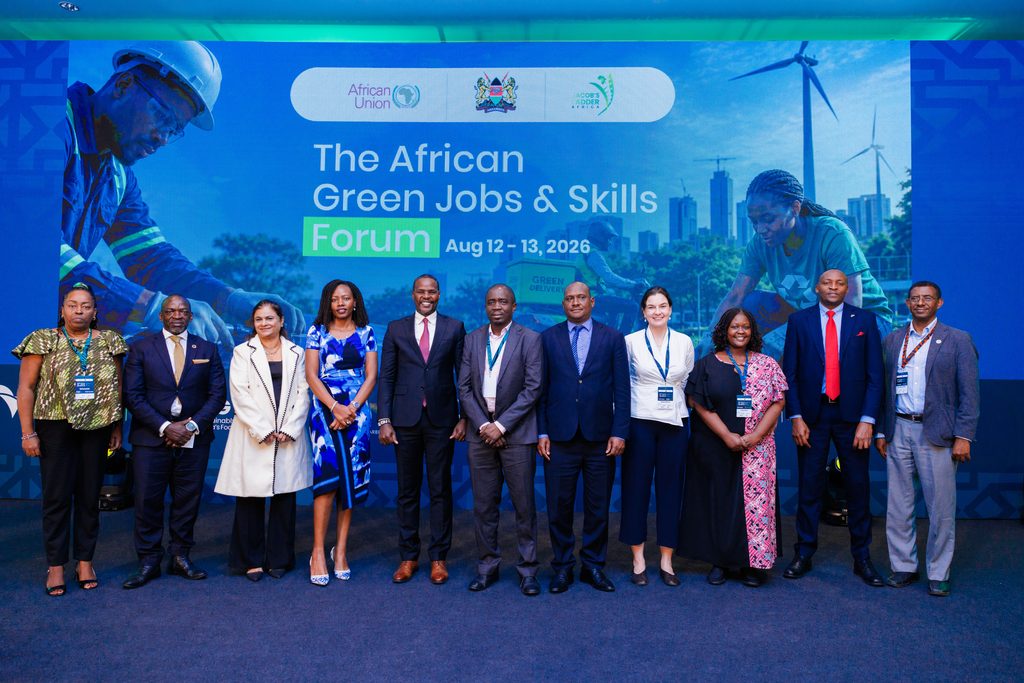
The conversations at the inaugural GreenWorks 4 Africa Forum in Nairobi stretched across almost every part of Africa’s emerging green economy. Finance, electric mobility, renewable energy, skills development, enterprise, technology and policy were being examined from different corners of the same transition.
Across those sessions, it became apparent how many conditions have to align for green jobs in Africa to be created and sustained at scale.
That matters when considering the scale of the opportunity. A 2026 study commissioned by FSD Africa, Shell Foundation and Shortlist estimates that Africa’s green transition could support between 3.8 million and 7.9 million jobs by 2030, with clean cooking, solar home systems, waste recycling and electric two- and three-wheelers among the major employment drivers.
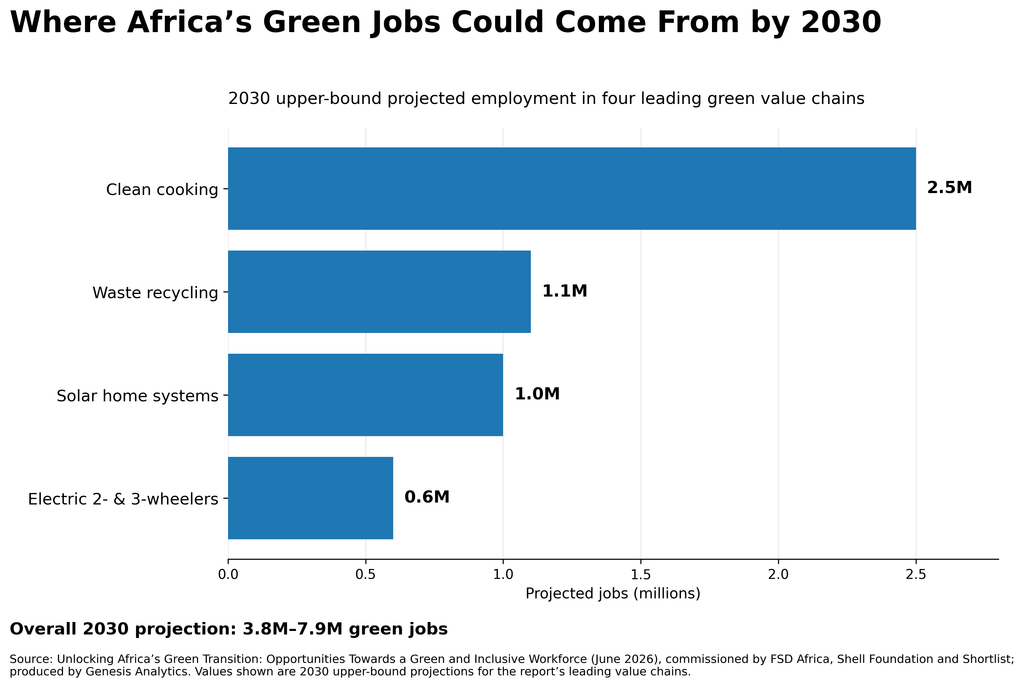
Reaching numbers on that scale will depend on the economies that develop around these sectors as they grow. But the size of the opportunity tells only part of the story. The same study estimates that 86 per cent of green jobs in 2030 could be informal, raising another question alongside job creation: what kind of work will the transition actually produce?
That question connects to a broader message that emerged strongly at GreenWorks: jobs will not simply appear because the green transition is underway. They have to be built into the way that transition develops.
That process begins long before a company recruits its first worker. It starts with where investment flows, which businesses are able to participate, whether the necessary infrastructure exists and whether workers have the skills emerging industries need.
The job, in other words, is the outcome of a much wider system taking shape around an emerging industry.

When Energy Becomes Economic Activity
Productive use of energy offers one way of seeing that process unfold. Once electricity becomes an input into production, questions of equipment, affordability, finance and markets quickly enter the picture.
One example raised during the renewable-energy session was Koolboks, a solar refrigeration company operating in Nigeria. With support from Powering Renewable Energy Opportunities, the company developed a lease-to-own model that enabled female fish traders in Lagos to access solar-powered refrigerators and pay for the equipment over time.
For the traders, the refrigerator became a productive asset. Electricity supported its use, while financing opened access to equipment that could change how products were stored and sold. Their economic opportunity began with access to an asset they could put to work.
As economic activity grows, the requirements around a business change. Enterprises need capital to acquire equipment, increase production and reach new customers. Their financing needs evolve as the business develops, and their potential to create employment increasingly depends on whether they can move from operating to growing.
Building Enterprises That Can Employ
Access to productive equipment is one stage in that journey. Businesses seeking to grow eventually encounter a different financing question: whether they are ready for the capital that can take them further.

This came through strongly in the session discussions at GreenWorks. Businesses seeking investment were considered according to where they were in their development, what an investor would expect to see at that stage and the support required to prepare them for financing.
For some enterprises, that involved strengthening internal capacity. Others needed to demonstrate that the opportunity they were building around could sustain a viable business. The discussion placed investment readiness alongside access to capital, recognising that enterprises at different stages require different forms of support.
Where capital enables viable enterprises to expand production, enter new markets and grow their operations, it can also create the conditions for additional employment. How much employment follows will depend on the sector, the business model and the way that growth takes place.
But where those jobs are created matters too. As renewable energy, electric mobility and other green industries expand across Africa, local businesses, suppliers and service providers have an opportunity to capture more of the economic activity developing around them. Their ability to participate and grow within these value chains will help determine how much of the employment generated by the transition is created within local economies.
And as those businesses grow, the skills they need become clearer.
Closing the Gap Between Training and Industry
A separate example from Nigeria, documented several years earlier, shows what can happen when industry grows faster than the supply of relevant skills. When Husk Power Systems was growing its solar mini-grid operations in 2020 and 2021, the company struggled to recruit some of the electrical, civil and mechanical skills required for its work. It responded by training workers locally, initially with support from staff in India, before Nigerian employees began taking on training roles themselves as the business expanded. (reuters.com)
A related pressure point emerged at GreenWorks during discussions on renewable energy, e-mobility and charging infrastructure. Expanding these systems will require people who can install, operate, repair and maintain them. Businesses are often among the first to see where those skills are missing because they encounter the gaps while deploying new technologies and trying to fill new roles.
The challenge is ensuring that those signals reach training institutions early enough for curricula and training programmes to respond to the work that industries are actually creating.
The discussion brought the relationship between industry and training institutions firmly into the jobs conversation. As sectors evolve, emerging shortages provide a clearer indication of where training needs to move next.
From Knowing What Works to Moving Forward
By the closing session at GreenWorks, the conversation had moved towards a question that reached beyond individual projects: why can progress still stall when so much is already known?
Africa already has research, policies, programmes and working examples across parts of the green economy. The challenge is increasingly one of implementation: identifying what is working, understanding the conditions that made it possible and determining what can be adapted or scaled elsewhere. The work now lies in moving from knowing what should happen to building the systems that make it happen

That means connecting areas that are too often treated separately: the policy environment, energy infrastructure that supports productive activity, finance that allows local enterprises to grow, and training systems that respond to the skills industries actually need.
The 7.9 million figure shows the scale of the opportunity, but whether those jobs materialise will depend on what happens between now and 2030.